I have been shooting stars on-and-off over the past few years, trying to improve my game by understanding the importance of proper polar alignment, photostacking, and noise reduction techniques. In early 2015, I visited Death Valley with a Nikon D700, Astrotrac TT320X-AG (which is no longer manufactured), and a rental Nikon 400mm f/2.8 lens. That trip ended in failure because the 400mm was simply too heavy for my tripod ball head and broke it.
After 8 years, I made that trip again, this time armed with the newer 400mm f/2.8E lens, and a Nikon Z7-II. I was also able to procure one last polariscope that was compatible with the Astrotrac, and was able to collimate it using the instructions shown here. (Unfortunately even the polariscope is now damaged, but I will probably not look for a new one. More on that later).
I stepped the lens down to f/4, and set the intervalometer to 120 seconds, and processed the photos in DeepSkyStacker + some color pushing in Photoshop.
Belt and Sword (200mm f/4, 120s)

Orion Nebula and Running Man are clear in the bottom left. I was finally able get a pretty clear picture of the Horse Head Nebula and Flame Nebula.
Orion Nebula and Running Man (400mm f/4, 120s)
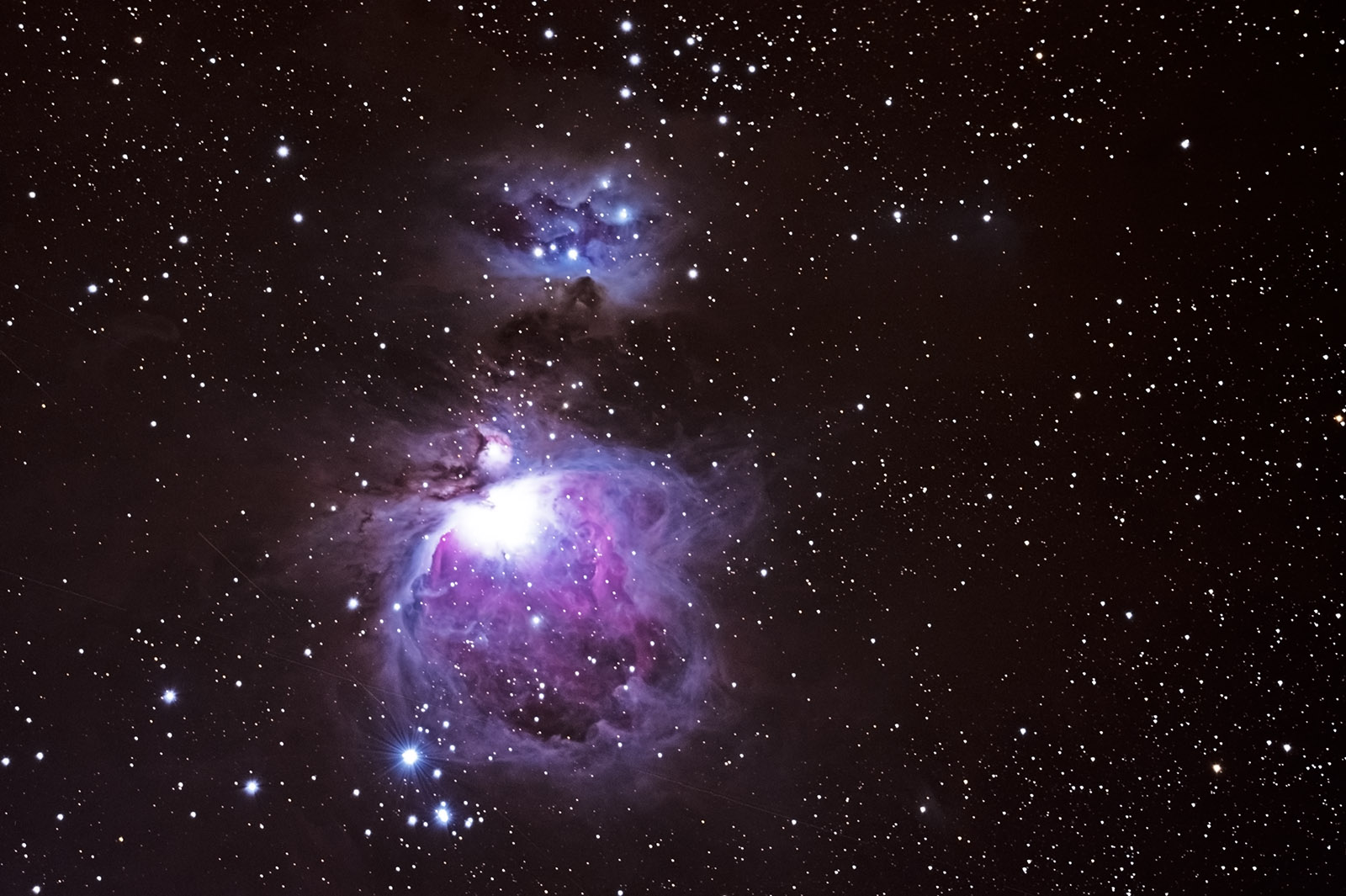
I have evolved as a photographer, if only in equipment and in patience. Compare this with the first photo of Orion Nebula. Compare the above with the following:
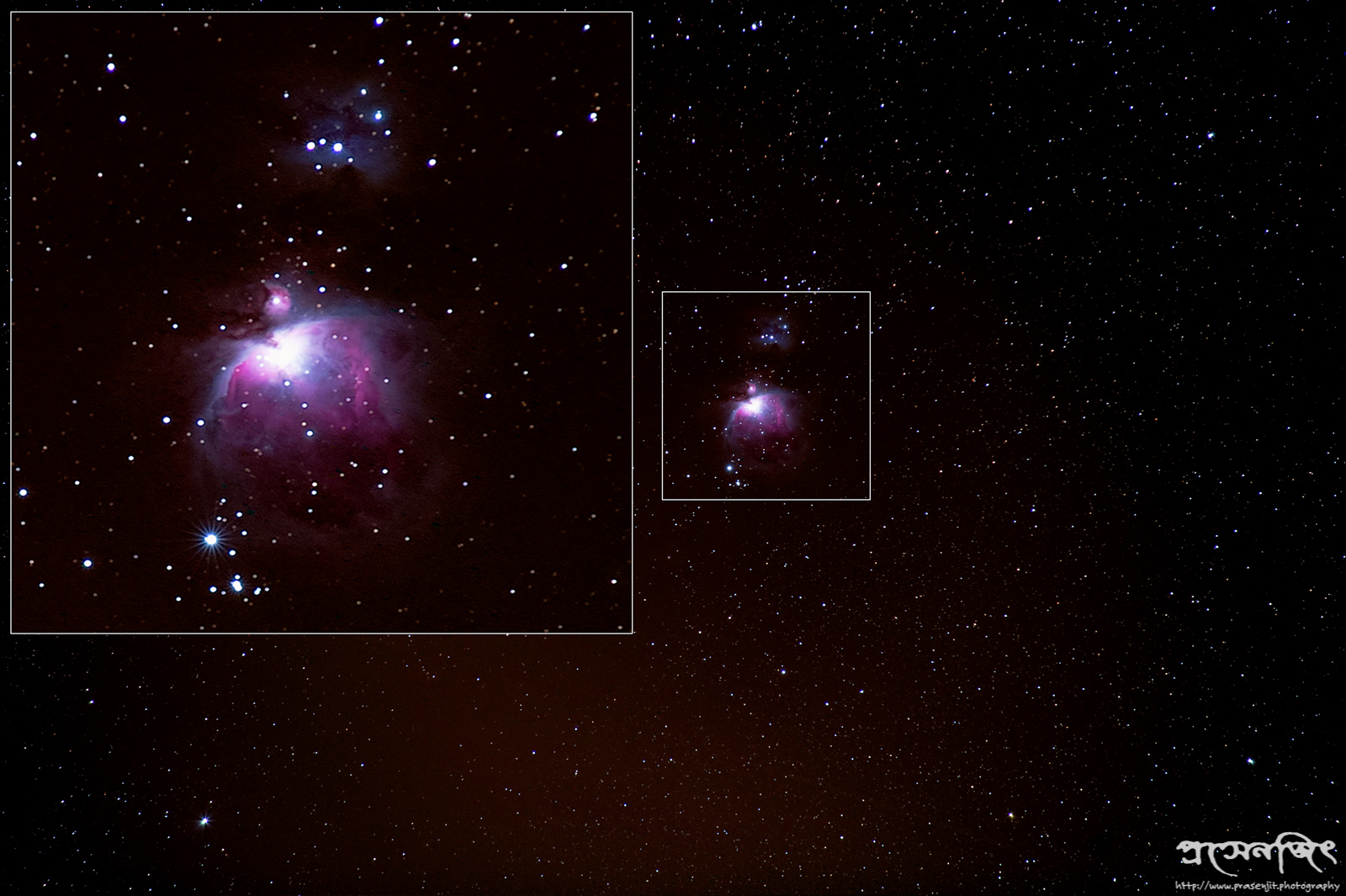 | 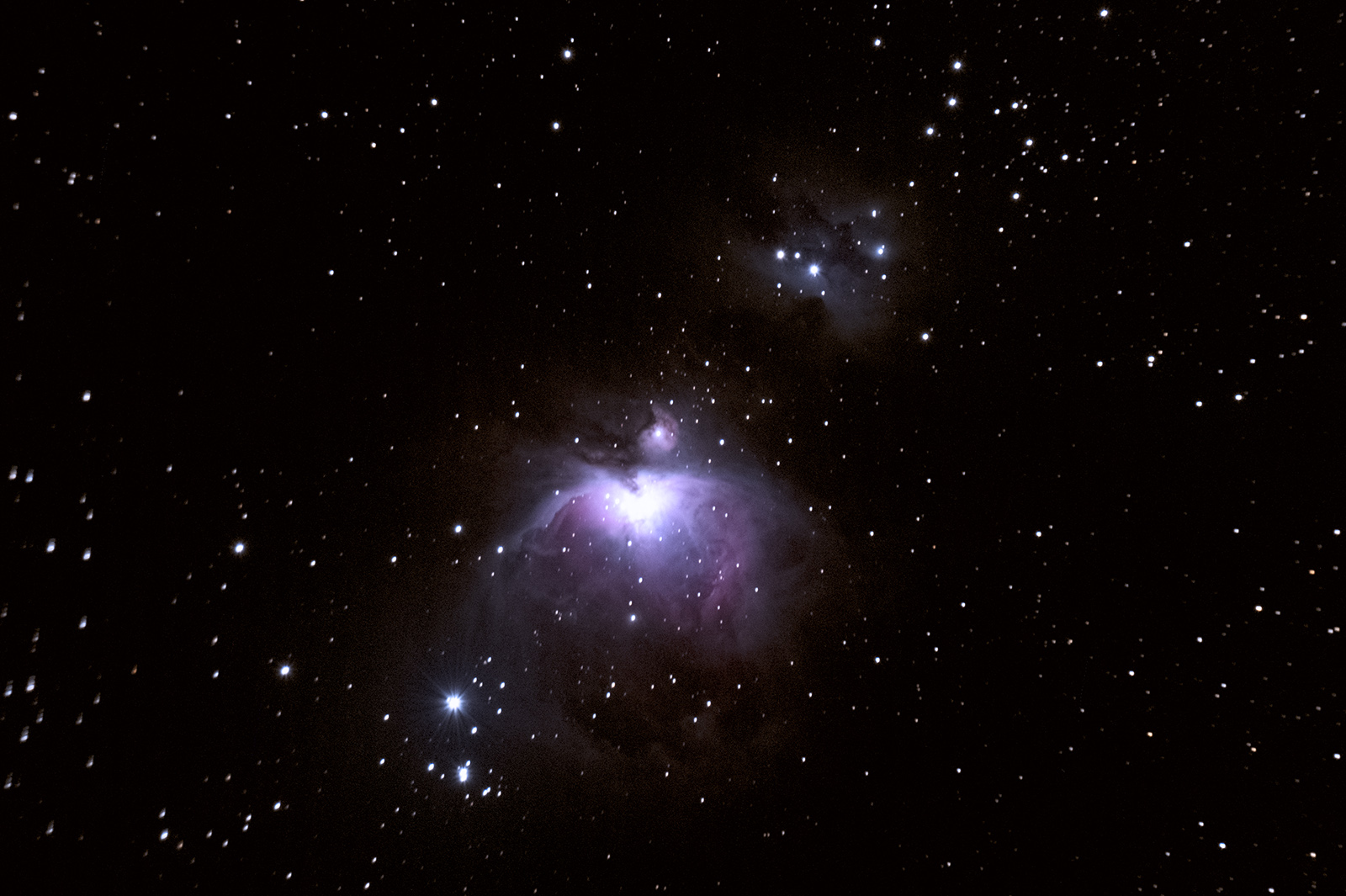 |
The photo on the left was taken in November 2013, with the D700 and 200mm f/4 and is at 100% zoom. The photo on the right was taken in March 2022, with the Z7-II and 400mm f/8 (!) and is probably at 50% crop. Why f/8? Because I had a rented a 200-400 f/4.5-5.6 and at the long end I was only able to get sufficient sharpness at f/8. It wasn’t a very good lens but it’s the best I could get my hands on. I’ll let the photos speak for themselves.
Horse Head and Flame (400mm f/4, 180s)
I was also fortunate enough to capture the Horse Head and Flame Nebula, see below.
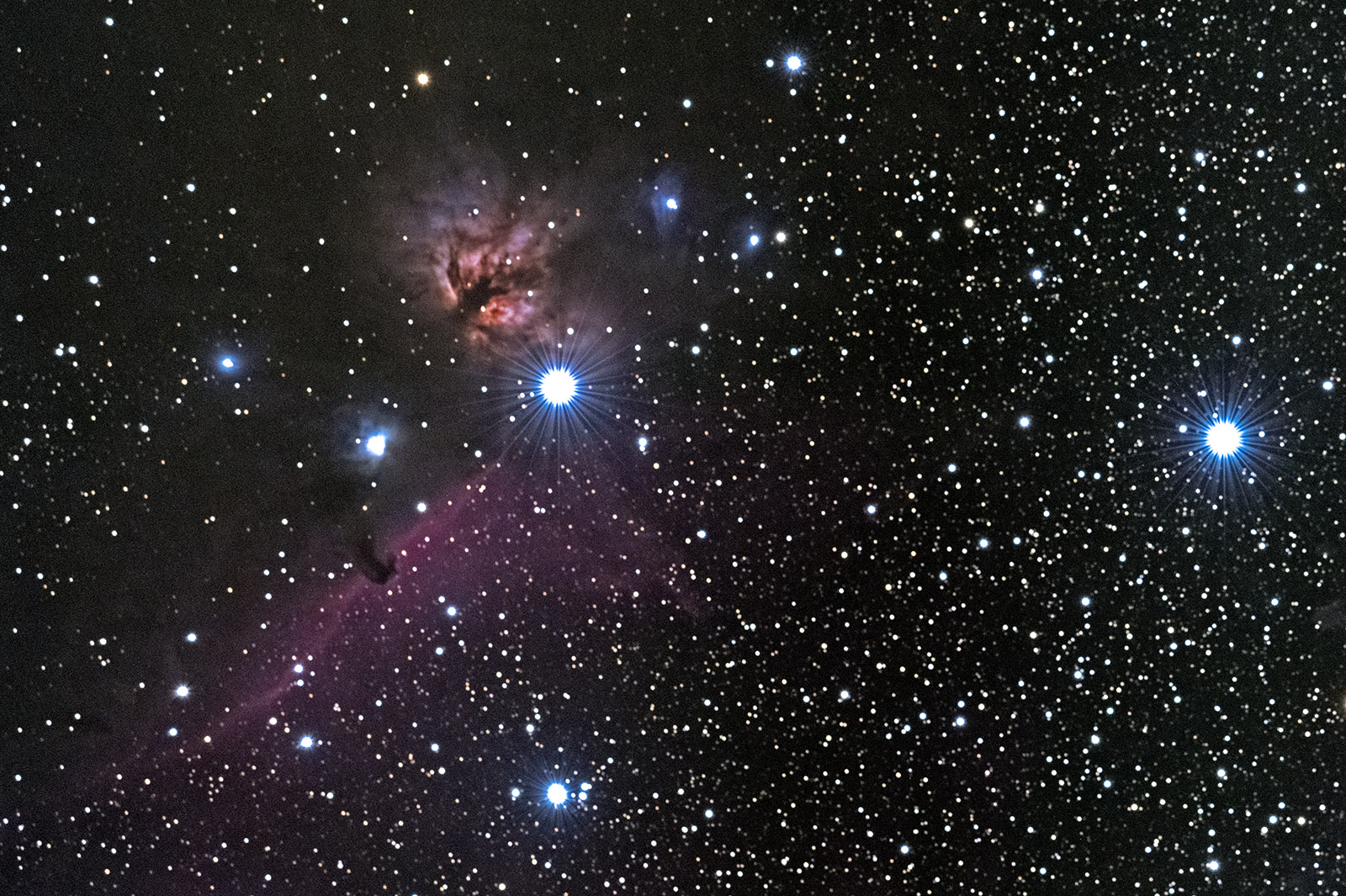
Horse Head is very faint and needs significant exposure/contrast modification for a reveal. Compare this with the only other time I was able to photograph it, in December 2014.

What’s Next?
I think I’ve reached the limit of what I can achieve with my current equipment. I may rent the 400mm f/2.8 again and try longer exposures, but I will need a new mechanism for polar alignment, since the polariscope that came with the Astrotrac is broken and I cannot find another one that fits. There are some CCD options out there that I would like to try. I expect the next limiting factor would be the Astrotrac itself. I won’t be able to get a longer lens since the 400mm f/2.8 is very heavy already and I can’t imagine longer telephotos being lighter even if they are lower aperture.
 Prasenjit Sengupta, Ph.D.